

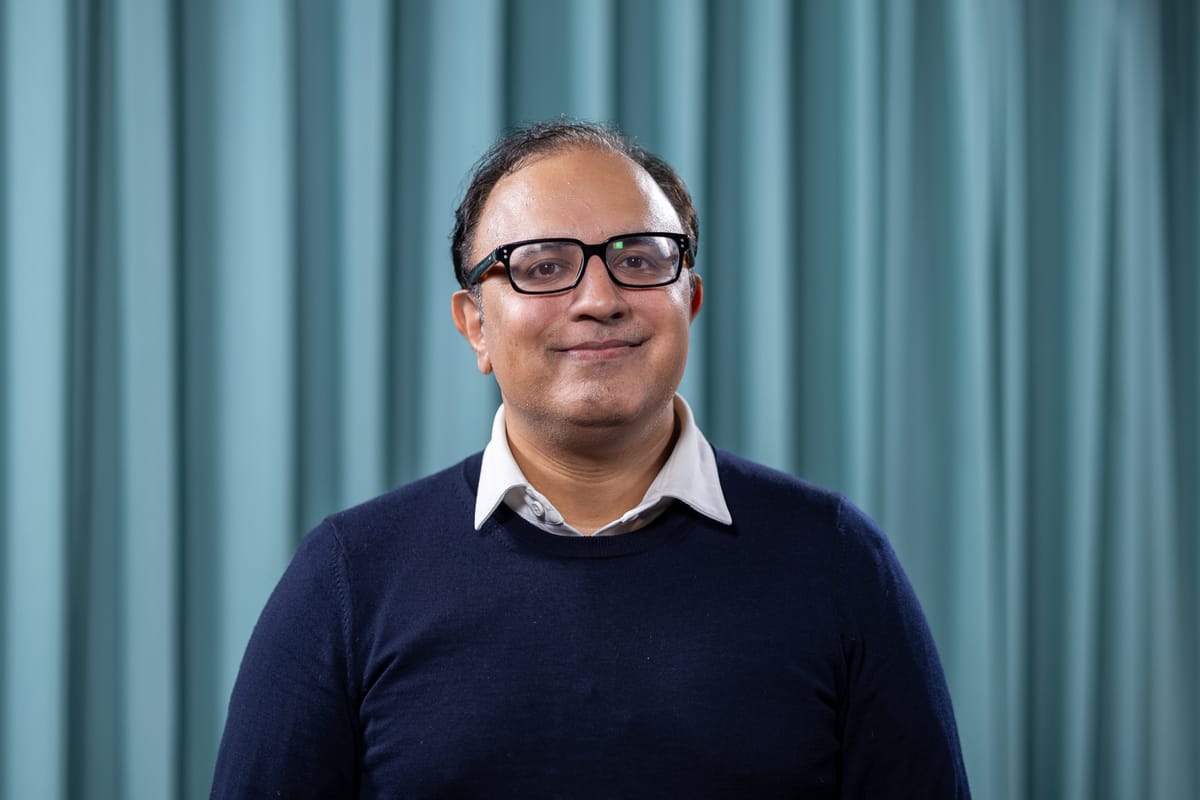
Gaurav Mehta left Morgan Stanley and General Atlantic to build Dharmalife, a social impact organisation which has supported more than 26,000 rural women entrepreneurs in India. The model came from a German insurance business he was once asked to analyse. What his own data then told him about that model is not what he expected to hear.
When we spoke he was in Düsseldorf, where he grew up. The week before he had been in Mexico and San Francisco. After the interview he left for Switzerland.
Six weeks earlier I had been working for that organisation as an intern, in Delhi and in the field.
Dharmalife recruits women in rural Indian villages, trains them, and makes them self-employed sellers of products with a social impact: solar lights, cookstoves, water purifiers, sanitary napkins, smartphones. They also run the campaigns that go with those products, on menstrual health, on clean cooking, on getting other women into work. One entrepreneur per village, and she keeps the margin. Since 2009 the network has grown to more than 26,000 women, impacting more than 17.5 million people across 45,000 villages in 16 states. Dharmalife works in Assam, Bihar, Chhattisgarh, Delhi, Goa, Gujarat, Jharkhand, Karnataka, Madhya Pradesh, Maharashtra, Manipur, Nagaland, Odisha, Rajasthan, Uttar Pradesh and Uttarakhand.
His story
There was a nail in his food. Mehta was the only vegetarian at the dinner. There was a nail in his meal, not in anyone else’s. The private equity fund he worked for was turning twenty-five and had booked a hotel in New York for the anniversary. He noticed it before he swallowed it. At the time that seemed like the end of it.
The food poisoning came a few days later. Calling it food poisoning is an understatement. It took him six months to recover from it.
“At that point I was not really clear whether I would make it through the whole thing,” he says. “At least the first few weeks were difficult. So you really start thinking about what actually matters in life.”
He had, in his own mind, more or less arrived at the end of it. What he could not take was everyone else. “You felt like you were ready. Okay, that’s it. That was in your mind. But then you saw everyone being even more sad.”
After getting through it, he decided not to stay in private equity full time.
Gaurav Mehta was born and raised in Germany, in Düsseldorf. India was two weeks a year. Most of his father’s family lived there, so the Christmas holidays were always spent in Delhi, every year, from the time he was little. “Language was not an issue, and being there was not an issue,” he says.
He studied business and French as an undergraduate, in Maastricht, in London and in Nice, and wrote his dissertation on mechanical trading systems and market efficiency. Then investment banking. Three years at Morgan Stanley, first in the capital markets team, then in healthcare M&A. Followed by General Atlantic, the growth equity firm, working across sectors.
From his first job onwards he gave roughly a quarter of his time to Pratham, an Indian NGO fighting illiteracy among children and getting them into school. Fundraising, strategy, whatever was needed. He describes it as a split rather than a conflict. Two things he wanted to do, both of which he was doing.
The finance-to-development story is well known and it usually runs on disillusionment. At some point the work turns out to be hollow and they leave for the greater good. That is not this. “I enjoyed the private equity life,” Mehta says, and he still does a little of it. He sits on boards. He has invested in companies. The split had been stable for years and by his own account would have stayed stable.
Nevertheless, the six months changed something. “It’s very strange, it’s very hard to explain,” he says, and then explains it anyway. The first thing that surfaced was family and friends, which comes first for most. The second was more specific to him. He had been working with those children for years, on schooling, on poverty, and it had always struck him as unfair. “I’ve always found it very unfair that these things happen,” he says. “I thought that maybe the fact that I was able to get through this has a purpose. That I should have a wider purpose, to try to make a difference.”
So he left. “I didn’t know what to do. There were many ideas.”
So he went to London Business School. He describes the MBA as the thing that sorted the ideas, and more importantly as where he met the people. His classmates became his co-founders and his board, and several went on to the corporates that Dharmalife now partners with.
Between the two years of the programme there is a summer break, and LBS runs something inside it called the Entrepreneurship Summer School, led at the time by Professor John Mullins. Mehta joined. The plan was a research study. They got some way into it before concluding the research was beside the point. “We can do as much desk research as we want and interview people. Until we have tested the model, we won’t learn anything.”
So instead of finishing the study, they launched in September 2009. For the first year they ran it from London. The co-founders took turns flying back and forth every two weeks. This was before Teams, before Zoom, before WhatsApp. “I think we were working on Skype, because that was the only way to do it. You had these 2G USB sticks on a laptop, and we gave that to the team member.”
In 2010, after his MBA, he moved to Delhi. He has been there ever since. None of the co-founders came with him. “It was clear from the beginning that nobody would work full time in the social sector in India after the MBA.” Most people take an MBA to change careers, and in that era the change ran towards M&A, consulting, private equity, hedge funds. That is what his co-founders wanted. They had student loans. Some had family businesses. “It was just very difficult for people to take that risk.” The deal they struck was that they would help him build this, and he would help them prepare for the interviews he had already been through.
“I was asked once to help set up the Mumbai office, to train and recruit for the M&A team there, and I did some due diligence work in India as well. So I worked there a little, but it’s very different when you hire your own team.”
The landing was softer than it could have been. He stayed at his grandmother’s place. “So it was quite easy.” Everything around that was not. “The approach to work, the mindset, the cultural dimensions, even how you live in India, from the noise and the air to other things. None of it is very easy.”
“There are so many complexities you only figure out on the way.”
Some of what finance taught him worked in India. Some of it didn’t. The useful half was the generalist habit. “As an investor you’re always a generalist. You have to understand everything, because everything can make or break the business.” Due diligence had forced him through every function of a company, operations, HR, finance, all of it, which meant he never had to pretend to be the finance guy or the HR guy when he became the one running things.
The other half was the work ethic. “You basically learn that in 24 hours you can do anything, technically, because you’ve done it. You’ve done crazy things in 24 hours.”
That did not travel. “It was also a nightmare, because hiring people in a nonprofit and expecting that kind of work ethic is very difficult. It was very tough to work in India with the nonprofit sector.”
But he adapted. “They say your first job really teaches you. It’s very hard to unlearn what you learned in the first three to six years,” he says. “But you learn to be more accommodating, and you learn to manage the interpersonal side, the personal journeys of people. That’s probably slightly different from the extremely aggressive finance space.”
The model
In his last months at General Atlantic, Mehta was put on a due diligence that offered the foundation Dharmalife still rests on today.
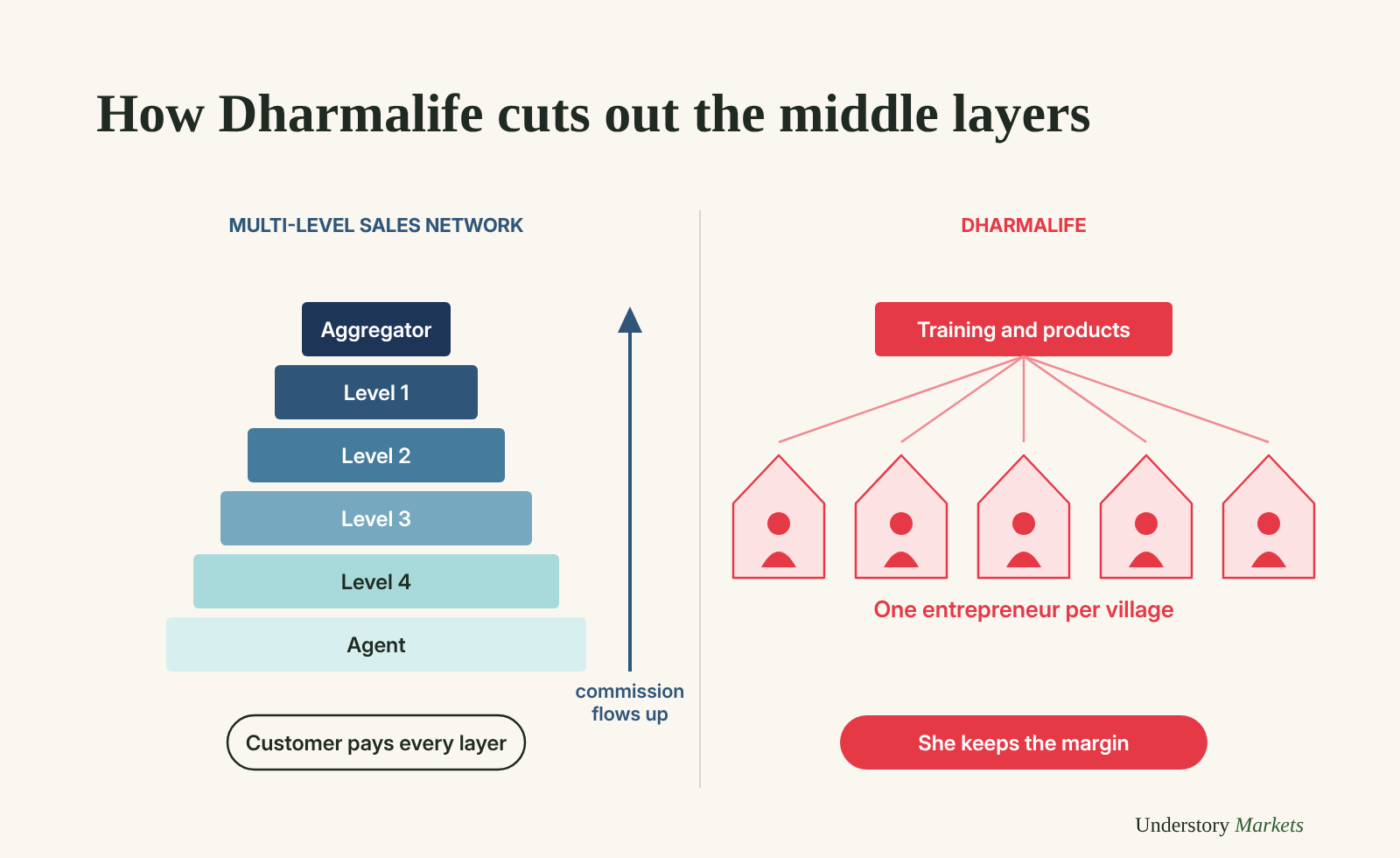
The target was a direct sales insurance network. In Germany these are known by their acronyms, AWD and MLP, and they work like this: rather than selling insurance through branches, you build a network of self-employed agents who sell to the people they already know. The agents recruit more agents beneath them. Commission flows up through the levels, and an aggregator sits at the top of the structure collecting from all of it.
General Atlantic was interested for the obvious reason. “They’re highly profitable,” Mehta says. “And they have huge people networks.” The plan was to explore a buy and build strategy.
He looked at the mechanism and had a problem with it. “There are a lot of pyramid incentives,” he says. “There are a lot of ethical issues in those incentives, because the product becomes more expensive for the customer, and there are multiple layers of incentives, and they multiply.”
In a multi-level structure, every layer between the manufacturer and the customer has to be paid, and all of them are paid out of the same transaction. The customer funds the pyramid. The more levels there are, the more expensive the product has to be to cover them. But the thing underneath the pyramid is not the pyramid. It is a distribution network that reaches people no branch, no shop and no advertisement can reach, because it runs on relationships that already exist.
At Pratham, the NGO he had been volunteering with, Mehta had spent years around a network of women in Indian villages. The problem he kept circling was employment. “How can I create so many jobs at village level?”
Sales was the obvious answer, and he already knew what a working sales network looked like, because he had spent months taking one apart. So he adapted it with two changes.
The first was structural. “Instead of having five levels or eight levels, let’s just have one or two levels.” And then he cut out the layers entirely. “The only rule, because we didn’t want pyramid incentives, was one person per village.” With one seller in a village there is nobody underneath her. The commission that would have flowed upward through five levels stays with the person who made the sale in the first place.
The second change was the basket. Rather than insurance, the network would carry products that solved something: solar lights, cookstoves, water purifiers, sanitary napkins. “Let’s change the product basket to make it a social impact product basket, which addresses social issues.”
“So that’s the two changes I made,” he says, “and then I applied this model.”
The economics are simple. The woman selling captures the margin that four layers above her would have taken. That is why the model produces a real income in a village where a shop cannot.
Why women
Dharmalife was never meant to be only for women. “Initially we were looking at how to create livelihoods or income for people who don’t have a job. It was purely focused on that,” he says. As long as the one-per-village rule held, it could be male or female. That is how it started, and after a year and a half, in 2011, Dharmalife had about 450 entrepreneurs working.
They have measured themselves from the start. They interviewed the entrepreneurs about how much they earned and, more importantly, what they did with the money. “After two years of work we found that we generated enough income,” he says. “But when we asked them what they did with the money, interestingly, most of the men spent the money on themselves, whereas the women spent the money on their family.” That called the whole thing into question. “We’re not trying to improve the wellbeing only of men,” he says. “We want the family.”
“That was a shock.”
Almost 90 percent of the network were men. Ten percent were women. The sales performance of the women was initially lower than the men’s. Their impact was much higher. “Women would invest in their family and their children.” If impact came first, it meant choosing women.
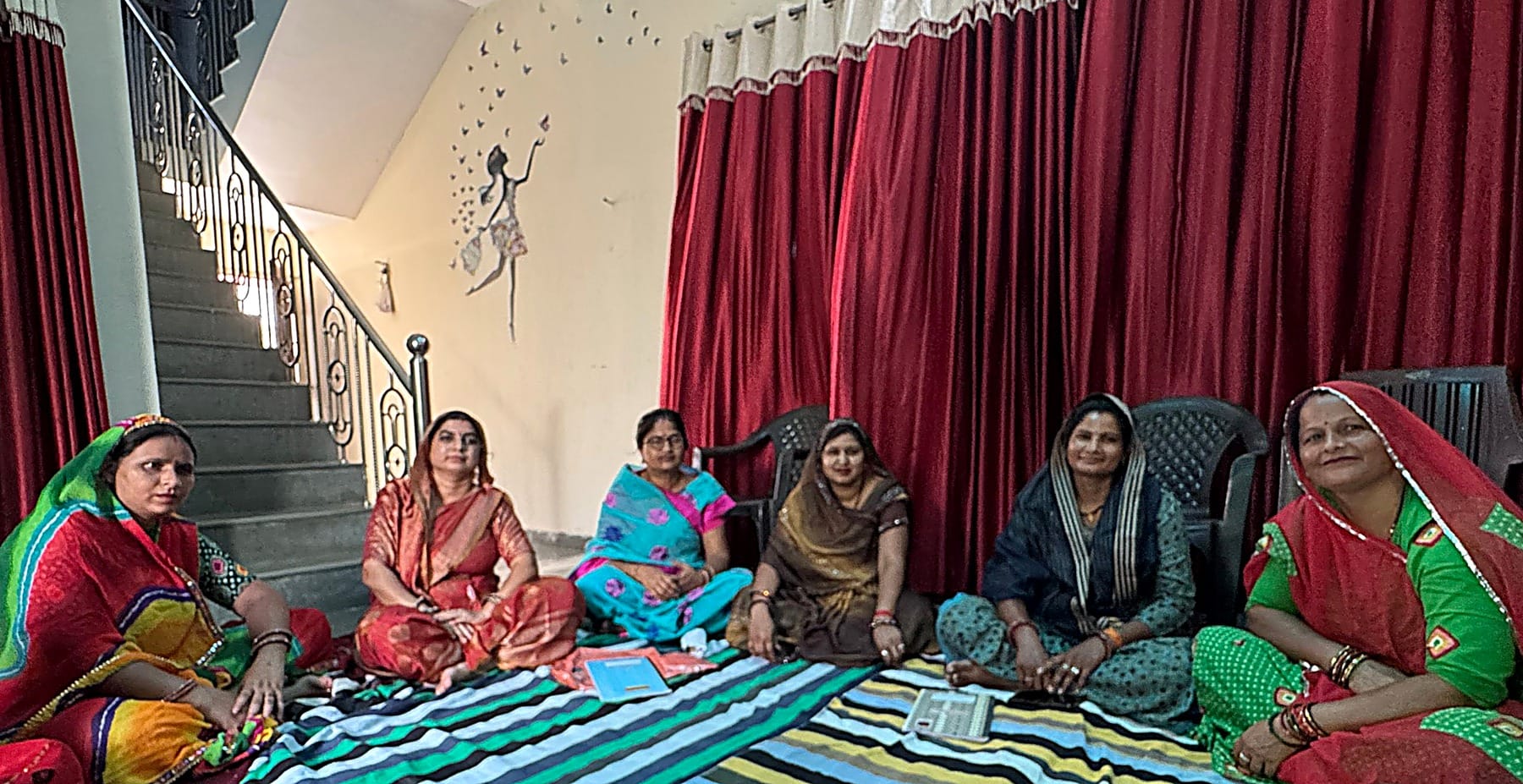
That was easier said than done. “The team was not very happy with this,” he remembers. “They said, we already have so much impact, we’re selling solar lights, cookstoves, all these products. Does it matter if it’s men who are selling? They’re also having impact.” The resistance was too strong to work through, so he went around it. He created a parallel team reporting only to him, and hired two young women early in their career to interview the entrepreneurs they already had. The premise was simple. “Why don’t we create a women-only network?”
They picked a district outside Delhi, around two hours away in Western Uttar Pradesh, on the way to Agra. “The target was whether we could recruit 100 women and see how we can make the whole model work.” They adapted the basket as well as the model. “We thought a female product basket might work.” Sanitary napkins, menstrual hygiene. And the manager would be a woman too. Then the three of them went out and recruited the first 100 women themselves.
The pilot worked, but not smoothly. “There were a lot of failures in between.” The manager quit after a motorbike accident. She was fine. Her parents were not. “Driving a bike in Western UP is a nightmare,” Mehta says. “She was okay in the end, but it was too much of a shock for the parents, so she quit.” Then Johnson & Johnson came in, supported the work and supplied the napkins, and the women’s network had something to scale on.
The timing of what happened next complicates the clean version of the story. The pilot ran through roughly 2013 to 2015. In the same period, programmes started arriving that would fund women and only women, such as Internet Saathi by Tata Trusts and Google. Mehta had already decided to make the switch. Now the switch had money behind it. “I had done my pilot and I was scaling up the women’s network, and then all of a sudden I automatically got funding to scale up the women’s network,” he says. “Because of that assured income, and getting women online, it was much easier to scale to women. And then all of a sudden our women’s model started scaling.” The men were phased out. Some kept working, but jointly with their wives. “That’s how it moved forward.”
“It was the impact. At the end of the day we were able to get the performance of the women up.” The sales gap closed. The numbers revealed another advantage. “The attrition was lower, the dropout rate for women.”
What it takes to reach a village
If a programme is running, a Dharmalife entrepreneur does at least ten to fifteen household visits. A group meeting. A community or school event, which might be at the school, the village assembly area or the health centre. Sometimes a stakeholder meeting. “That’s a typical day,” Mehta says, though it depends on the programme, and on what is happening in that area.
She has usually finished eighth or tenth standard. Sometimes she is a graduate. She might be eighteen or she might be fifty. “We keep it flexible for them to enter, and flexible on hours, so that those with care responsibilities or other responsibilities can manage.”
The basket has changed over the years. “Our biggest category was smartphones, by far,” Mehta says. Then solar lights, then cookstoves. Beyond those, a basket that now runs to productive use products, sanitary napkins, water purifiers. Smartphones were hard at first and then became the fastest-selling thing in it. “You would finance the phone. So it’s not only the product, it’s also financing.”
Almost everything in the basket needs explaining before it can be sold. “It’s a concept product, mostly.” That is why the model needs a person in the village rather than a shelf. Nobody buys their first electric cookstove off a shelf.
Behind her is the part nobody sees. Getting a specific cookstove to a specific woman in a specific village, on time, and then getting paid for it.
The help came from an unexpected direction. Shell Foundation became a funder in 2011, and the deal was not only money. “One of the deals was that apart from giving us funding they would also help us on each of the business functions. So I worked with the head of supply chain at Shell, the corporate in India, and the head of IT, and the head of HR.” The Dharmalife supply chain was designed with Shell’s head of supply chain in India. He helped them find the warehousing. Then they built the last-mile model together.
Seventeen years on, he does not claim it is solved. “It was very complicated, very costly, very time consuming. That is still the case.” What breaks it is not the weather. “Time consuming is fine, you know what it is and you can manage.” It is what cannot be scheduled. “There are climate events now, and there are local issues. For example, we had an issue right now in the northeast where the roads were shut.”
Today Dharmalife is much more than a network of saleswomen, and the reason is a meeting in 2019. With the numbers scaled up, Mehta brought representatives from every state to Delhi for a consultation. The question was what to do next. You are selling all these categories, so what would you want in order to earn more?
Their answer was not about products. “We like what we do, and we can add more products,” he summarises, “but our biggest problem is that we have a lot of friends and colleagues and family who also want to be a Dharmalife entrepreneur, and you’re not allowing that, because you say there’s only one entrepreneur per village.” While the one-per-village rule was the thing that made the model ethical, it was now also capping it. “We said, yes, but there’s probably no economic logic in having more than one. And they said, well, can they not do something else? When we’re busy we already recruit some of them to help us.”
What Dharmalife took from that was not about sales. “We realised that the women more and more become role models in the village. People look up to them and want to become like them. So we figured, what if we use them to get other women into the workforce?” There are plenty of organisations that train rural women for jobs. “There are so many people doing this, why don’t we just connect with them?”
The design was simple. The entrepreneur runs a community meeting, sensitises the women in her village, counsels whoever is interested, and pairs them with a skills training programme and a placement. They designed the pilot in 2019 and got it approved in December and January of 2020.
Many will know what comes next. The pandemic hit.
“We had to digitise the model. We changed the approach: if we can’t do these meetings physically, let’s do them on WhatsApp and make it a digital process.”
The same thing happened to the reading programme. Lighting Up Young Minds started in 2015 as something small: on Literacy Day, the 8th of September, the entrepreneur would read with children in her village. It stopped needing to be paid for. “Afterwards it became a movement. We do it once a year and they mobilise the village.” At its peak it reached around a million children in a single day. Then schools shut, and the learning platform built for the skilling programme was rebuilt for children. LUYM Learning launched in 2021.
Dharmalife is not simply a distribution channel that happens to have people attached, but a set of relationships in 45,000 villages that can be pointed at whatever needs attention.
How funding works
Money reaches a village in Rajasthan in one of three ways, and the differences decide what Dharmalife is allowed to become. The first is an outcome payment, where the funder buys a result: a cookstove sold, a solar light sold, sanitary napkins sold, a learning outcome achieved. “Let’s say one outcome is worth 100,” Mehta says. “You spend that with the team, and then you give them the proof through the impact protocol, and then you get paid. Let’s say you get 20 upfront, or 30 upfront, and the rest afterwards.” Dharmalife fronts the work and gets reimbursed once it can prove the work happened. What proof looks like came up when he described a project in the northeast with SustainPlus, who wanted solar dryers, solar cold storage and solar rooftops installed. “We install the solar rooftop or the solar dryer, and they pay us once we’ve delivered the proof, with geotag and timestamp and the customer invoice and confirmation.”
The second type is a programme grant, paid in tranches against milestones, with every expense defined in advance, booked in SAP and audited before the next tranche arrives. The third is unrestricted, money the organisation spends as it judges best, roughly 10 to 20 percent of what comes in, and the source of most of the innovation and technology work. There are also loans. FMO, the Dutch development bank, gave them one, to rotate inventory.
All of that proof has to come from somewhere, and Dharmalife built a research function to produce it. Mehta is clear it was not built for the funders. “The development challenges are huge. You really need to continuously learn and iterate your model, and for that you need data and ongoing tracking. You need it for measuring impact, as well as for iterating and improving. That’s how the lab was set up jointly with London Business School. It’s really important to do that, because without it, how will you continue to improve, or even survive?”
The first study was the one that changed the organisation, the two-year assessment that found men spending their income on themselves. “That wasn’t intended as anything more than an impact assessment.” It became formal in 2015 and 2016, through London Business School and Professor Rajesh Chandy. “He helped us analyse and understand our data, to improve impact and business processes.” In 2020 that work turned into Dharmalife Labs. What started as a learning and listening exercise is now a separate group inside the team.
Then the number that matters. “Today 90 percent of the funding is bound, and that’s one of the biggest problems.” Bound means somebody else has already decided what it buys. There was one exception, and it was the same organisation that helped build the supply chain. “At the beginning we had one partner who was open to unrestricted funding, the Shell Foundation. Now it’s less so.”
“Most of the strategy of people is outcome-based. They have certain targets and they want you to achieve them, and they don’t want to fund the organisation itself. They want to have the outcome.” Every grant carries a small allowance for overheads, 5 to 15 percent. What is hard to find is money that pays for the thing before the outcome exists. “They say the cost has to be capped, and then they pay for the outcome. They don’t pay for the design, or the innovation. Mostly they don’t. It’s very rare.”
“In the past it used to be very unrestricted. The more professionalised the industry has become, the more they’ve taken this outcome-based approach.” There’s a logic to it. Funders can see whether anything happened, and audits mean money isn’t lost. The cost falls on everything that isn’t an outcome yet. The research lab, the next idea, the thing that hasn’t proven itself, all of it comes out of the thin slice nobody has earmarked. “You can’t really innovate.”
There is a countertrend, though he is careful about it. In the US some funders have started giving unrestricted money again, on the theory that the returns are higher. “If you let people innovate, there’s a high chance people will improve the outcomes rather than just delivering them,” he says. “But that’s a small niche right now.”
What Mehta wants next is not a bigger grant. “In the future, my goal is to create an endowment that would at least secure us and get us out of the annual funding cycle.” Once it is large enough it would fund the core operation from its return. Nobody would approve the spending. Nobody would cap the overhead. He knows what that will take, and he has not done it yet.
Does the model travel?
It can. Just not with him running it.
“I definitely think it can travel. We have been asked many times.” He has taken the trips, to South Africa, to Tanzania, to Zambia. Elements of the model have already been replicated elsewhere, in Rwanda and Kenya, though not in as integrated a form.
Funders were interested. “They would fund Africa much more than India, and they were saying, well, can you do that?” He looked at it seriously. “It became a very complicated thing to do and implement, and just physically not possible.” Latin America was on the cards too.
“For me, humanly, it’s just impossible to run another country. India is already so big. To add a state, or to go deeper in a state, the problem is big enough.” Someone else will have to carry the model abroad. He’ll help them, but he can’t be the one to go.
You cannot judge India by the averages
I asked him what the data never captures.
“The averages never cover it,” he says. “You have both extreme rich and extreme poor. It’s a land of, almost a continent of, opposites and extremes. Everything can be true. You cannot judge India by the averages. That’s the problem. That’s the case in many places, but it’s even more the case in India.”
The classification does most of the damage. India is middle income, which means development funders route elsewhere. “It’s a struggle with a lot of funders who just say, we’re not going to work in India, we’re just working in Africa.”
Mehta is not disputing the classification. He is disputing what people do with it. The absolute numbers are still staggering. “You still have the largest number of cases. On the mental health side, on the poverty side, all these numbers are massive.”
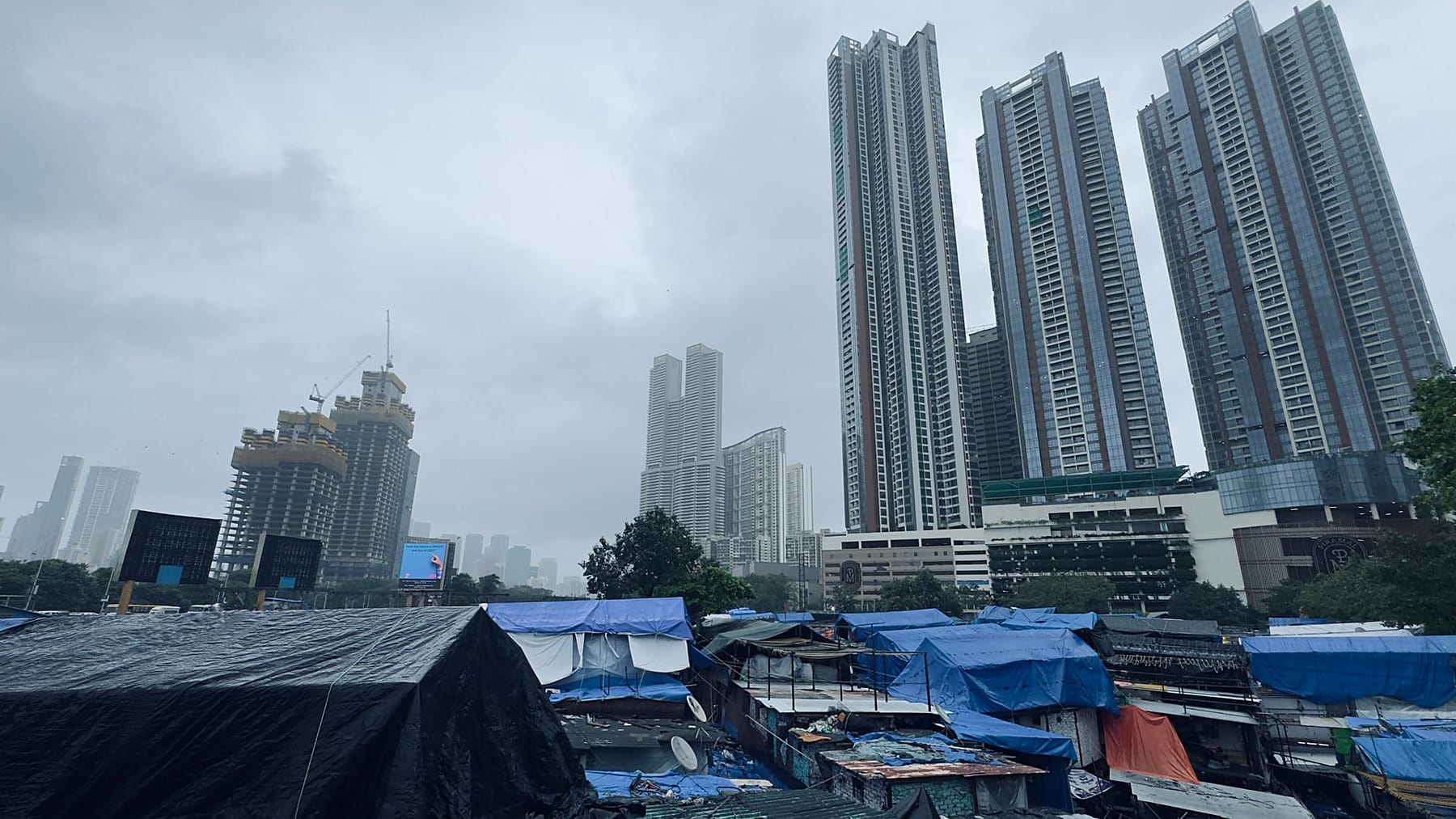
Some funders stop thinking in whole countries. “Some of our partners have said, we’re only focusing on these states.” They’ll tell him not to work in Kerala, where average incomes are much higher. Sharper than a national classification, and still too blunt. “Even within a state it’s uneven. In Maharashtra, Mumbai moves everything up, but the rural area of Maharashtra is still poorer,” he says. “A richer area doesn’t mean it has fewer challenges.”
So I asked him where he’d take a foreign investor, if he had one for a day.
“What I would show them is the interaction with the community and with the women. That would be the main thing.” And then, to me directly, which is the reason I think he meant it: “You’ve met a number of the entrepreneurs. That’s the key part of our model, how aspirational they are, how they try to change, how they have changed, what their journey is.” He went on. “Obviously you show them all the systems, the technology, and everything else, but I would show them the women and get them to meet the women. That’s where the heart of our model is.”
I had met them. Six weeks of it.
One of them was Meena Devi. She does not cover her face anymore, which in her village is a decision rather than a habit. People told her that lifting her sari off her face was disrespectful, that her place was at home with her family. Her whole family was against it. Only her husband stood with her. She lifted it anyway, and she says Dharmalife gave her the courage to do it. She has been selling for ten years, induction cookers mostly, seventy or eighty of them. That money put her daughter through teacher college. Her daughter teaches now.
I asked her about her proudest moment and expected her to name a number. She did not. She said it was proving to her family and her village that she could do work with dignity.
She became a Dharmalife entrepreneur by accident. A field coordinator came to the house looking for her older sister, who was not home. Meena opened the door. She is president of her group now.
Would meeting women like her change how an investor sees the country? “It’s very hard to say, but I would hope so. Because again, the human stories are the most important stories.” Elsewhere in the conversation he put it more plainly. “Mostly people are positively surprised, always.” And he will not comment on a country he has never been to. “Have you been? If not, please come.”
China is the comparison everyone reaches for, so I asked whether India follows the same path. “I think it’s a different pathway, Erik. It’s very hard to comment on this.” The obvious difference is what each country grew on. “India has been a service-led growth story, whereas China has been a manufacturing-led one. I think it’s changing around. India is scaling manufacturing through ‘Make in India’.” He does not think the gap closes everywhere. “China is clearly much further ahead on the AI front, and that’s unlikely to change soon even with the investments happening at the moment.”
The deeper difference is structural, and he is careful about how he puts it. “The Chinese system is a very directional, structured system, whereas India goes towards democratic, in a good way, democratic up and down. Obviously that makes it much slower.”
Then he stopped there. “They’ll be separate stories.”
Analytical takeaway
Charity needs room to innovate. Ninety percent of Dharmalife’s funding is tied to a result someone else has already chosen. That keeps the money accountable, but it leaves almost nothing for new ideas. The women’s pilot, the skilling programme and the research lab all came out of the small part nobody had earmarked. If charity is only paid for what already works, it will never find what works better.
Measure yourself from the start. Dharmalife studied its own impact two years in, before anyone asked. Nobody was paying for it and nobody would have noticed if it had been skipped. It showed that the model worked but was aimed at the wrong people. Today research is its own team inside the organisation. Good decisions need good research behind them.
A country is not a market. India is classified as middle income, so a lot of development money goes to Africa instead. But the average hides the reality. Mumbai makes Maharashtra look rich while rural Maharashtra stays poor. Wiza Jalakasi told me the same about Africa. Two continents, the same lesson.
Closing
Then I had one question left, the one I ask everyone. What is the question nobody asks that you wish they would?
He turned it around. “I would ask you. What is your one-line impression? You’ve spent six weeks in India. What are your impressions?” I had spent the whole conversation trying to interview Gaurav Mehta, and in the last minute he asked me something I had not prepared for.
I told him I really enjoyed it. That a lot of what people say about India is not true, or at least not as bad as everyone says. Friends who have never been had warned me not to go, and the people I met were nothing like the warnings. But I underestimated the heat. Even if someone had told me, I wouldn’t have believed how hot it can get. You have to experience it.
At Dharmalife I heard the stories you would want to hear. A woman called Suman who joined in 2016. She bought a printer, used what she earned to open a printing, internet and small services shop, and ended up running the place her village goes to when it needs something printed, filed or ordered. She had started with a phone she couldn’t switch on.
And on my first day there was a girl holding onto my trousers and begging for money. Barefoot, maybe seven or eight years old. She has not left me.
“It has continually been improving,” Mehta answered.
Both of those things are true, which is the point.
“You cannot judge India by the averages.”
If you have thoughts on this piece, feedback, or want to get in touch, write to hello@understorymarkets.com